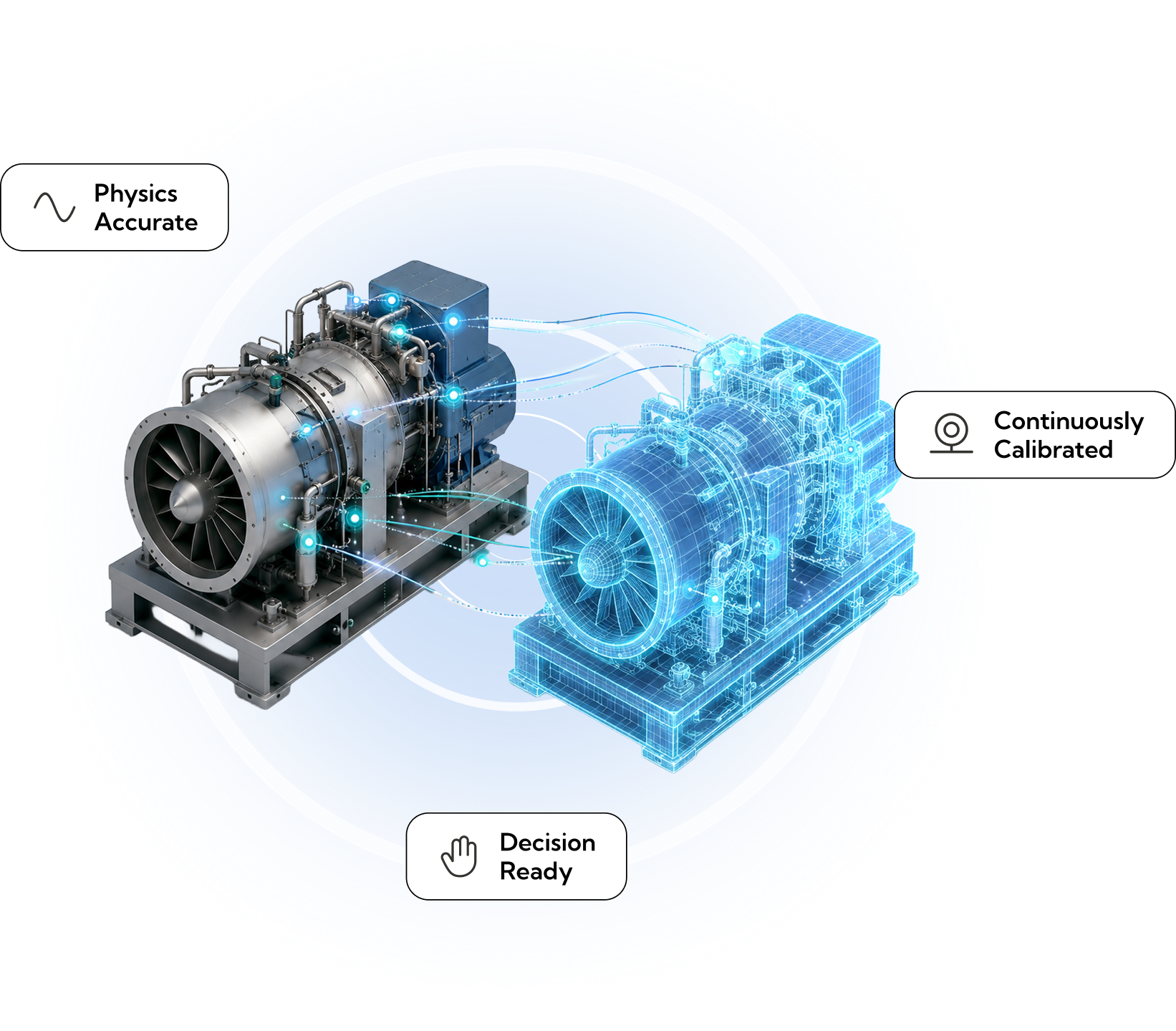
We build high‑fidelity digital twins that mirror the behaviour and state of physical assets combining simulation models, sensor data and operational history into living, continually updated representations.
Sync between physical assets and their virtual replicas
Thermal, structural, fluid and multiphysics behaviour captured
Start with one asset, scale to systems and fleets
A digital twin is more than a 3D model or a one off simulation. It is a virtual representation that stays in sync with the physical asset receiving live data, reflecting configuration changes and supporting ongoing analysis across the lifecycle.
We calibrate models continuously against operational and sensor data, so the twin remains an accurate reference rather than a static snapshot frozen at commissioning.
CORE CAPABILITIES
A pragmatic set of capabilities that make digital twins useful for engineering, operations and business teams alike.
CATEGORIES
Our projects typically fall into one or more of these recognised digital twin categories.
Focused on key parts such as pumps, valves or drives — detailed physics models combined with local data for design and maintenance decisions.
Represent entire machines compressors, furnaces, robots linking models and data to performance, reliability and energy metrics.
Capture collections of assets such as a production line, substation or microgrid, focusing on interactions and overall behaviour.
Link multiple systems and workflows manufacturing, supply chains, service operations to surface bottlenecks and trade offs.
HOW WE WORK
The same disciplined approach we use across our simulation practices — modest claims, traceable steps.
Clarify which asset or system to focus on and which decisions the twin should inform.
Map available simulation models, data sources and configuration information already in place.
Align model fidelity with data quality, connect live feeds and validate against the real asset.
Deliver dashboards and workflows engineering and operations teams can use day to day, then scale.

We usually start with a single pilot twin and clear success measures before scaling to systems and fleets.